
Key takeaway: Walnut kitchen cabinets can give a luxury villa warmth, depth, and a timeless high-end feel. The best results come from careful material selection, balanced color pairing, and a supplier who can control quality at scale.
How do you make a luxury villa kitchen look rich without feeling heavy? For many builders, designers, and overseas dealers, the answer is walnut kitchen cabinets. Walnut brings natural warmth, visible grain, and an upscale finish that fits large residential projects well. It works especially well in villas, where open layouts and strong daylight can show the wood’s character. Walnut is also not just about looks. It is a premium material choice that can support a project’s market position when quality and consistency are managed correctly. Walnut cabinets are popular because they balance elegance with practicality. In high-end homes, that balance matters.
OPPEIN is a good example of a supplier built for large-scale residential and dealer needs. The company’s brand portfolio covers multiple market tiers, and its business model supports manufacturing plus marketing and installation coordination. That structure matters for villa projects, where timing, finish consistency, and after-sales support can affect the full delivery experience.
1. Why Walnut Kitchen Cabinets Fit Luxury Villas
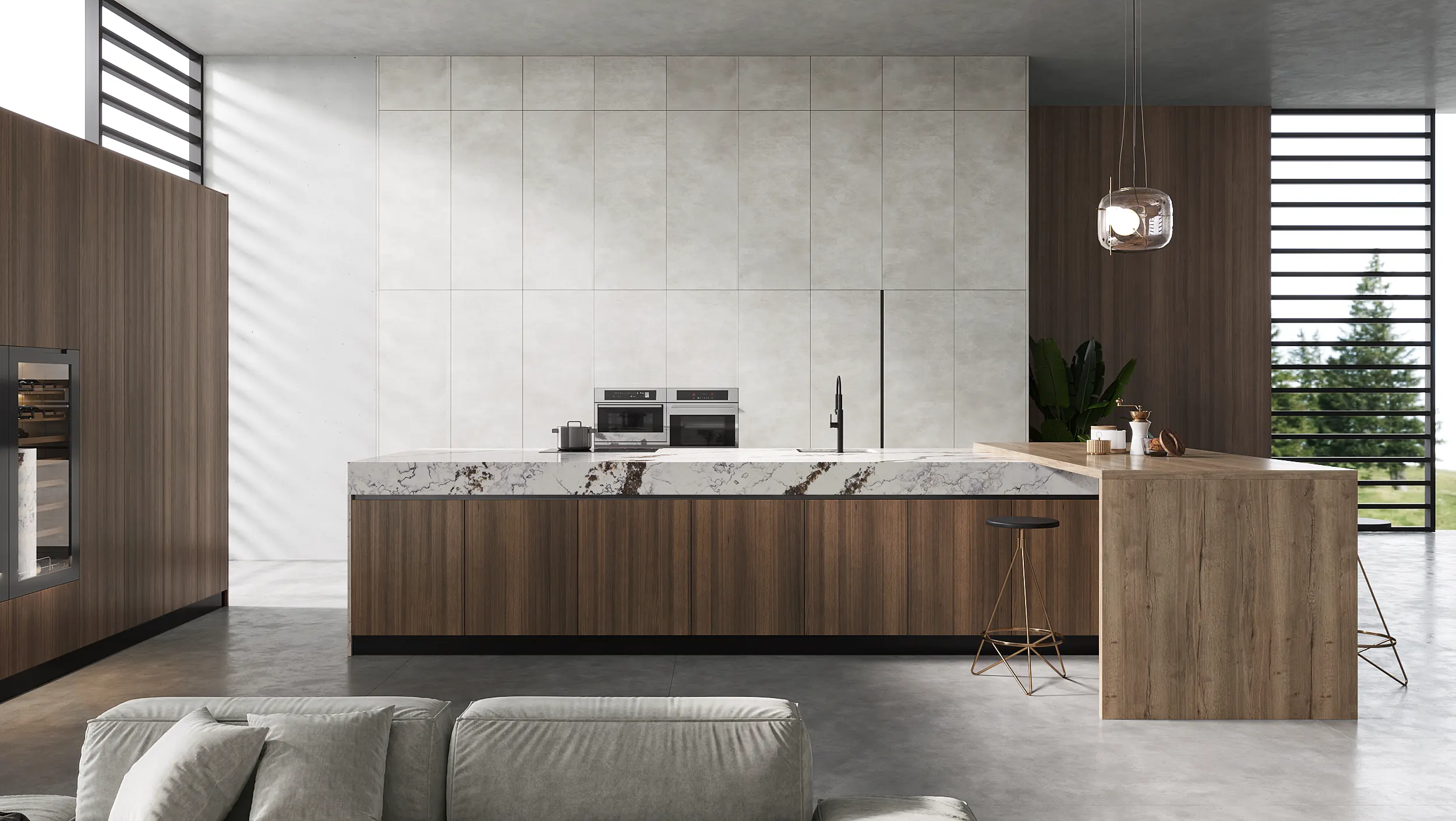
Luxury villas need materials that feel natural but still polished. Walnut kitchen cabinets deliver that look. The dark-to-medium brown tones create visual weight, which helps a large kitchen feel grounded. In a villa with high ceilings, large windows, and long sight lines, walnut adds comfort without losing prestige.
Walnut also has a strong design advantage: it reads as high-end in both modern and transitional interiors. It can be used for full-height cabinetry, an island feature, or a mixed-material kitchen with lighter wall cabinets. This makes it flexible for overseas projects where buyers may want a more customized look.
From a commercial view, walnut cabinets can help a villa project stand out in a competitive market. Buyers often associate walnut with craftsmanship and premium living. That perception can support both resale value and customer satisfaction when the material is executed well.
2. Material Choices That Protect the Look
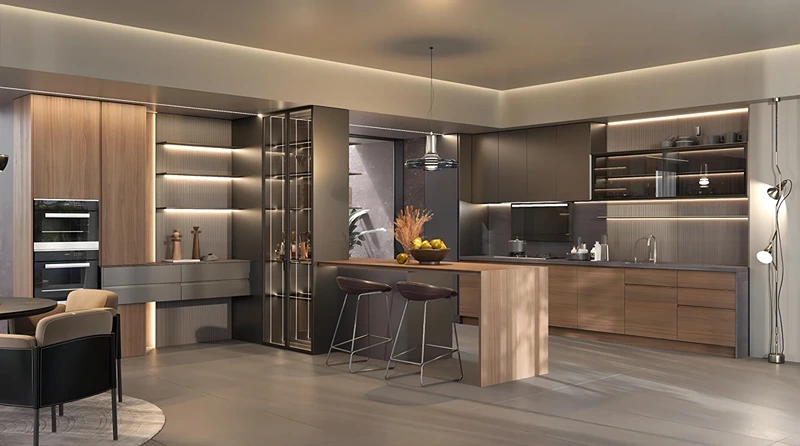
Not all walnut kitchen cabinets are the same. Real walnut wood has natural variation in tone and grain, and that variation is part of the appeal. But for large orders, that same variation can create inconsistency if it is not controlled. A supplier should be able to manage color matching, grain selection, and sapwood control across multiple units.
For project buyers, the practical question is not only “Is it walnut?” but also “How uniform does it need to be?” Some projects benefit from natural variation. Others need a tighter visual standard. Ask your supplier about veneer selection, finishing method, and whether tinted topcoats or color control processes are used to keep the final look even.
In villa kitchens, the island is often the focal point. That makes finish quality even more important. Minor color shifts may be acceptable in a private family kitchen, but they are more noticeable in open-plan luxury spaces. Clear finish specifications and sample approval are essential before production starts.
3. Best Design Pairings for a Walnut Kitchen
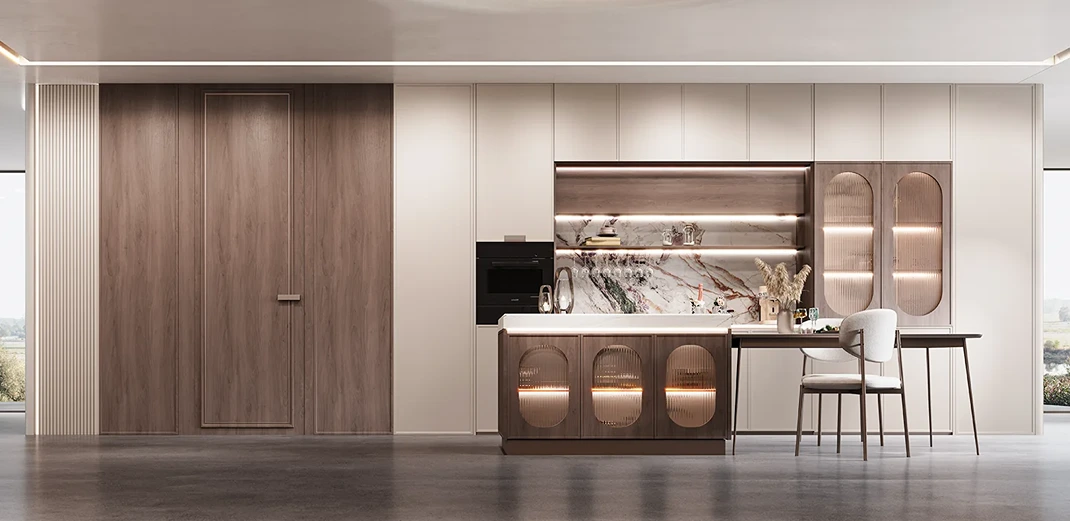
Walnut cabinets work best when the surrounding finishes support the wood instead of competing with it. Light wall colors are a common choice because they keep the kitchen bright and help the walnut stand out. Soft ivory, pale beige, light gray, and muted blue-green tones are all practical options for balancing darker wood.
Hardware also matters. Warm metals can reinforce the luxury feel, while matte black can create a sharper, more contemporary look. The right choice depends on whether the villa design is more classic, modern, or transitional. A coordinated hardware finish helps the walnut kitchen feel intentional rather than visually crowded.
Countertops are another major decision. In many luxury villas, designers use marble-look quartz, natural stone, or light-toned slabs to soften the visual weight of walnut. This keeps the kitchen bright and helps the wood remain the hero material. In open-plan homes, that balance is especially important because the kitchen often connects directly to the dining and living areas.
4. What Dealers and Builders Should Check Before Ordering
For overseas dealers, the cabinet supplier is as important as the design itself. Ask for detailed samples, production drawings, finish specifications, and color references. Walnut can look very different under showroom lights, site lighting, and daylight. Testing samples in the real villa environment is the safest way to avoid surprises.
It is also smart to confirm lead times, packaging standards, and replacement support. Luxury villa projects often involve more coordination than standard residential jobs. Delays or damaged panels can affect multiple trades on site. A supplier with stronger manufacturing systems is better positioned to handle that pressure. OPPEIN’s published materials emphasize manufacturing capability, large-home furnishing strategy, and dealer-based sales support, which are relevant signals for project buyers evaluating supply reliability.
Here is a simple project checklist:
- Request full-size samples, not only small chips.
- Confirm whether the finish is real walnut, walnut veneer, or walnut color.
- Approve grain direction and color tolerance in writing.
- Check hardware, hinges, and drawer standards.
- Review packing and replacement procedures before mass order release.
5. How Walnut Cabinets Add Value in Villa Projects
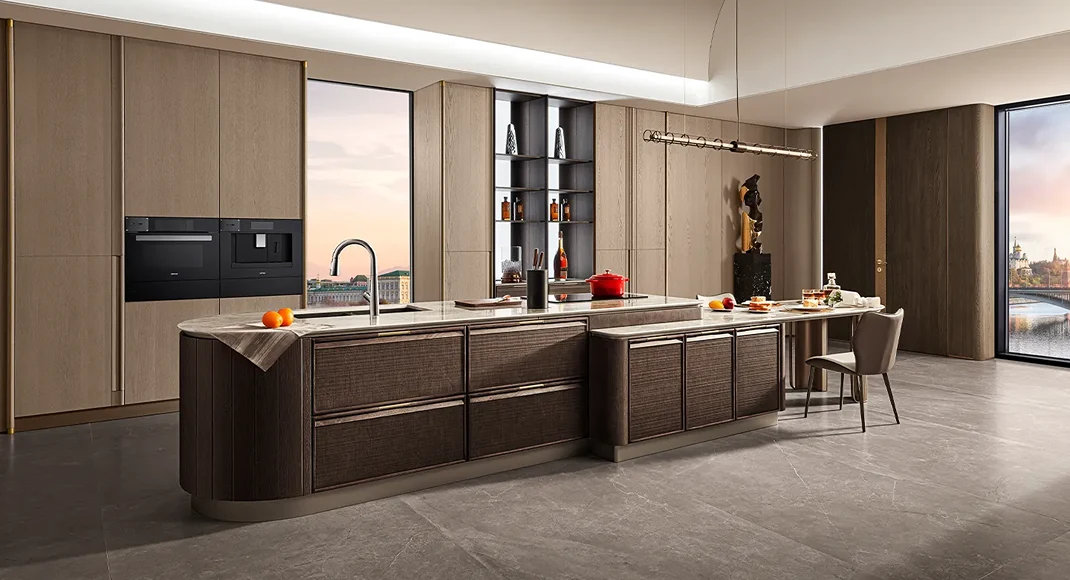
Walnut kitchen cabinets do more than improve appearance. They can support the positioning of the entire property. In luxury villas, buyers often notice the kitchen first because it signals both lifestyle and build quality. A well-executed walnut kitchen makes the home feel warm, expensive, and complete.
Walnut also photographs well, which is useful for developers and designers marketing completed properties. Rich wood tones can help a kitchen stand out in brochures, online listings, and showroom displays. That visual impact can be valuable for overseas dealers trying to differentiate their offering in a crowded market.
Another advantage is longevity in style. Bright white kitchens rise and fall in trend cycles, but walnut tends to stay relevant because it feels natural and grounded. For villa projects aimed at premium buyers, that makes walnut a safer long-term design choice. It is elegant without being tied to a short-lived trend.
FAQ
Are walnut kitchen cabinets suitable for modern villas?
Yes. Walnut works well in modern villas because it adds warmth to clean lines and open layouts. It can be paired with light walls, simple hardware, and stone surfaces for a contemporary look.
What is the difference between walnut wood and walnut color?
Walnut wood is the actual hardwood. Walnut color is a finish or stain designed to imitate that tone. For project buyers, this difference matters because the material, grain, and color consistency can vary a lot.
How do I keep walnut cabinets from looking too dark?
Use lighter wall colors, reflective countertops, and good lighting. You can also mix walnut with lighter upper cabinets or open shelving to soften the overall look.
What should overseas dealers ask suppliers before ordering?
Ask about material type, finish process, grain consistency, sample approval, lead time, packaging, and after-sales support. These details reduce risk on large villa projects.
If you are planning a luxury villa project and need walnut kitchen cabinets that balance design quality with reliable production, OPPEIN can support you with a large-scale, project-ready cabinet solution. Contact the team to discuss your drawings, sample needs, and supply requirements for your next villa development.