
Quick Overview
A successful cabinet franchise showroom is more than a display space—it is a sales tool that builds trust, showcases brand quality, and helps convert visitors into customers. The article explains how to choose the right location, design around the customer journey, use curated merchandising and technology, and balance inspiration with operational efficiency to boost profitability and support both retail and trade sales.
Key Takeaways
- - A showroom should inspire confidence, shorten the sales cycle, and increase average order value through well-planned product displays.
- - Choose a location with strong demand, good accessibility, visibility, and nearby complementary businesses.
- - Design the layout around the customer journey, with clear flow from entrance to consultation areas.
- - Use fully styled vignettes, clear merchandising, and visible premium options to make products easier to understand and sell.
- - Invest in technology, staff training, and efficient back-of-house operations to improve speed, service, and conversion rates.
Opening a cabinet franchise showroom is one of the most effective ways to enter the home renovation and interior products market. For entrepreneurs, a well-planned showroom does more than display products. It builds trust, communicates brand quality, and turns browsing visitors into paying customers. In a category as visual and experience-driven as cabinetry, your showroom becomes your strongest sales tool.
Whether you are launching a first kitchen showroom or expanding into a larger cabinet business, the way you design, zone, and operate your space will directly influence profitability. The best showroom strategy blends customer psychology, product presentation, and operational efficiency. It also supports both B2C retail and B2B wholesale opportunities, especially for franchise partners who want to serve homeowners, builders, designers, and developers.
This guide explains how to plan a high-performing kitchen cabinet showroom for your franchise, from location selection and showroom design to merchandising, technology, and customer experience.
- Why a Well-Planned Cabinet Franchise Showroom Matters
- Start With the Right Market and Location
- Plan the Showroom Layout Around the Customer Journey
- Design for Inspiration, Not Just Inventory
- Use Merchandising to Increase Sales
- Invest in Technology That Supports Faster Sales
- Balance Retail Experience With Operational Efficiency
- Build a Showroom That Tells a Brand Story
- Train Staff to Sell Solutions, Not Just Products
- Common Mistakes to Avoid When Planning a Cabinet Showroom
- Why Franchise Support Gives You an Advantage
- Final Thoughts
- FAQs
Why a Well-Planned Cabinet Franchise Showroom Matters
A showroom is more than a display area. It is the physical expression of your brand. In the cabinetry industry, customers want to see finishes, touch materials, compare layouts, and imagine how products will work in their own homes. A strong showroom makes that process easy and enjoyable.
For entrepreneurs exploring cabinet franchise opportunities, the showroom plays several important roles:
- It builds confidence in product quality and brand credibility.
- It shortens the sales cycle by helping customers visualize complete solutions.
- It supports upselling through coordinated kitchen, wardrobe, bathroom, and custom furniture displays.
- It creates a consistent brand experience across all customer touchpoints.
- It provides a professional environment for designers, builders, and trade partners.
In other words, a thoughtfully designed showroom can generate leads, increase average order value, and improve conversion rates.
Start With the Right Market and Location
The first step in planning your franchise showroom is choosing the right market. Not every retail area is ideal for a cabinetry business. You need a location that matches your target audience and gives you room to showcase product categories effectively.
Look for strong local demand
Choose a market with active residential development, renovation activity, or a growing population of homeowners and property investors. Areas with nearby construction zones, interior design districts, or home improvement traffic are often strong candidates for a kitchen cabinet showroom.
Evaluate accessibility and visibility
Your showroom should be easy to reach, with clear signage, parking access, and strong street visibility. Customers investing in a kitchen or whole-home renovation often visit multiple suppliers. A convenient location helps you stay competitive.
Consider surrounding businesses
Being close to related industries can help drive walk-ins and referrals. Nearby architects, builders, appliance retailers, tile stores, and flooring showrooms can complement your business and increase exposure.
Plan the Showroom Layout Around the Customer Journey
Effective showroom design begins with the customer journey. People visiting a cabinet showroom want inspiration, clarity, and a low-friction buying experience. Your space should guide them naturally from first impression to consultation.
Create a welcoming entrance
The entrance should immediately communicate your brand style and product quality. Use a clean visual identity, strong lighting, and one or two high-impact display areas that introduce your core offerings. Avoid clutter. First impressions matter.
Build a logical flow
Arrange the space so customers can move from inspiration displays to comparison zones and finally to consultation areas. A natural flow might include:
- Brand introduction and hero display
- Kitchen vignettes and cabinet style examples
- Material and finish library
- Wardrobe, bathroom, and custom furniture displays
- Consultation and design desk
Allow room for conversation
Cabinet purchases are often high-value decisions that require planning and advice. Include comfortable seating, a private meeting area, and a clear design workstation where staff can review layouts and quotations with clients.
Design for Inspiration, Not Just Inventory
A common mistake in a cabinet franchise showroom is trying to display too many products in one space. A showroom should inspire customers, not overwhelm them. Focus on curated displays that show complete lifestyle solutions instead of isolated items.
Use fully styled vignettes
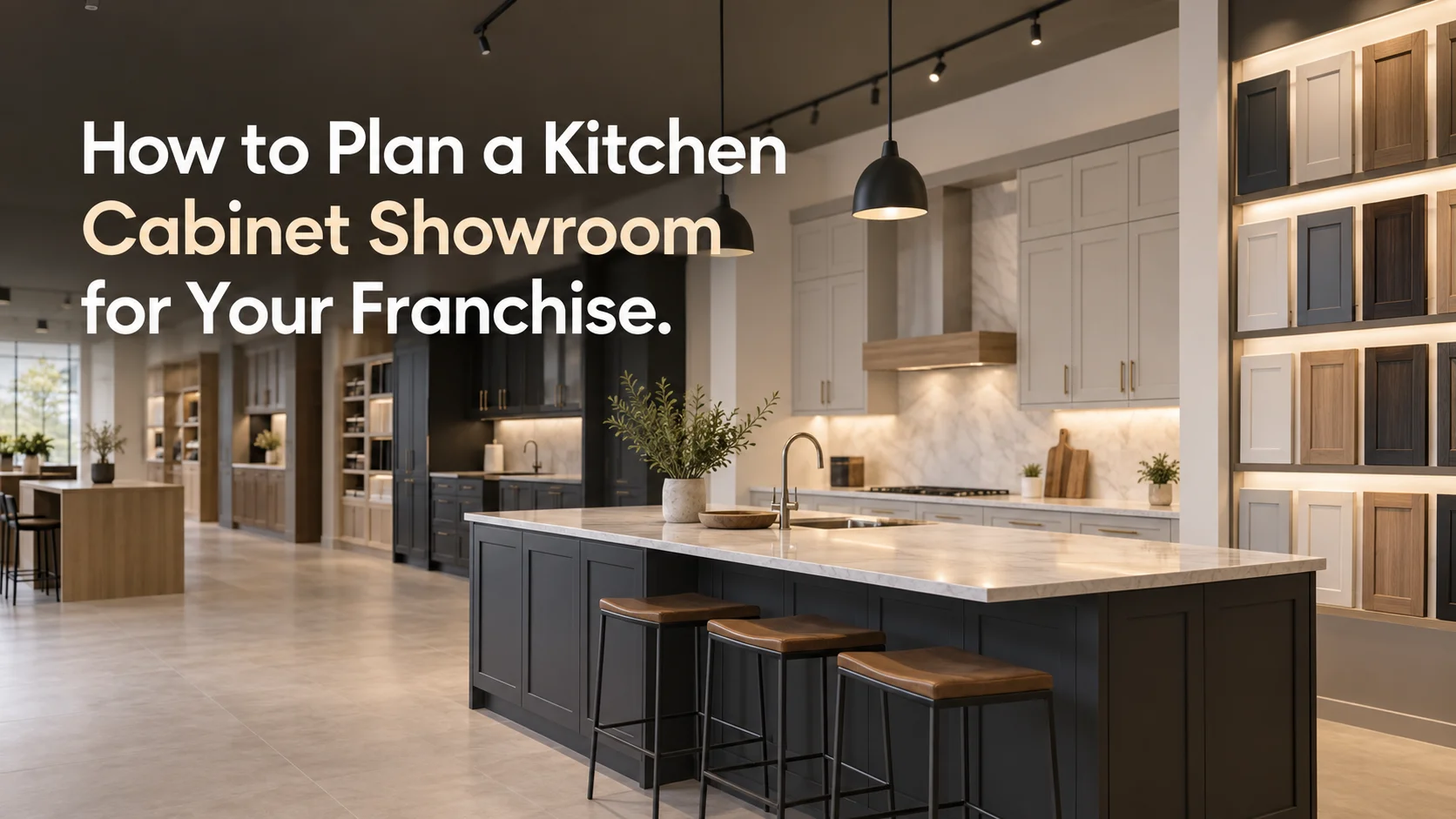
Rather than presenting cabinet boxes alone, show finished kitchen environments. Include countertops, lighting, hardware, appliances, and complementary finishes. Full vignettes help customers imagine the final result and increase emotional engagement.
Show different price points and styles
Mix modern, contemporary, and classic styles to appeal to a wide customer base. Include a range of finishes and configurations so visitors can see how your products fit different budgets and tastes.
Highlight your core product portfolio
If your franchise supports whole-house customization, display more than kitchens. Bathrooms, wardrobes, laundry storage, doors, windows, and custom furniture can expand the order value and position your showroom as a one-stop solution.
Use Merchandising to Increase Sales
Strong merchandising makes your products easier to understand and easier to buy. Every element in the showroom should support a commercial goal.
Organize materials clearly
Cabinet doors, countertops, handles, and finishes should be easy to browse. Use labeled sample boards, touch-and-feel stations, and color-coordinated displays to simplify selection. Customers appreciate being able to compare options side by side.
Group products by use case
Instead of separating displays only by product line, group them by customer need. For example:
- Compact apartment kitchens
- Family kitchens with island layouts
- Luxury open-plan kitchens
- Space-saving wardrobes
- Modern bathroom vanities
This approach makes it easier for customers to imagine solutions that match their home and lifestyle.
Make premium options visible
Many buyers begin with a budget mindset but upgrade when they see value. Position premium features such as soft-close hardware, integrated storage, and high-end finishes in visible areas so staff can easily explain the benefits.
Invest in Technology That Supports Faster Sales
Today’s buyers expect speed, clarity, and professionalism. Technology can make your cabinet franchise showroom more efficient and more persuasive.
Use rapid 3D design tools
Fast visualization tools allow your team to create room layouts, show product combinations, and revise proposals during the consultation. This helps customers move from interest to decision faster.
Enable quick quotations
Accurate, timely pricing builds trust. A showroom that can provide a quotation quickly gives customers confidence and reduces the chance of losing a sale to a competitor.
Integrate digital displays
Large screens, tablets, and interactive lookbooks can present product catalogs, before-and-after examples, and installation case studies. Digital tools help save floor space while enriching the customer experience.
Balance Retail Experience With Operational Efficiency
A great showroom is attractive, but it must also function smoothly behind the scenes. A profitable cabinet business depends on efficient operations, especially when handling multiple orders and customer types.
Plan storage and back-of-house areas carefully
Even though the front showroom should feel open and elegant, you still need practical space for samples, documentation, packaging, and staff workflow. Hidden storage helps maintain a clean presentation while supporting daily operations.
Design for staff productivity
Place consultation desks, sample libraries, and design workstations in locations that allow staff to assist customers without disrupting the showroom flow. Efficient layouts improve response times and reduce friction during busy periods.
Prepare for trade customers
If your franchise serves builders or interior designers, consider a dedicated area for project meetings, specification reviews, and sample selection. Trade clients often value speed, reliability, and technical support.
Build a Showroom That Tells a Brand Story
Your showroom should communicate more than product range. It should tell customers why your brand is the right choice. A clear brand story helps you stand out in a crowded market.
Keep the visual identity consistent
Use the same colors, fonts, signage, and design language throughout the showroom. Consistency creates a polished and memorable experience.
Show proof of quality
Use displays, certifications, project visuals, and customer success stories to reinforce trust. Buyers often need reassurance when making a significant home investment.
Connect lifestyle to function
People do not buy cabinets only for storage. They buy calm, organization, efficiency, and beauty. Position your displays to reflect real life rather than just product specifications.
Train Staff to Sell Solutions, Not Just Products
Your showroom is only as effective as the team operating it. Staff should be able to guide customers, explain options, and convert interest into action.
Focus on consultative selling
Train team members to ask the right questions about space, style, budget, and project timeline. This allows them to recommend the best solution instead of simply presenting a catalog.
Teach product knowledge
Staff should understand materials, finishes, hardware, customization options, and installation considerations. Confident and informed guidance improves trust.
Develop quotation and follow-up skills
Many sales are won after the first visit. Establish a clear follow-up process for quotes, revisions, and after-sales support so no opportunity is lost.
Common Mistakes to Avoid When Planning a Cabinet Showroom
Many entrepreneurs underestimate the complexity of designing a profitable showroom. Avoid these common mistakes:
- Trying to display too many products in too little space
- Neglecting consultation areas and staff workflow
- Using generic displays that fail to reflect the brand
- Ignoring lighting, signage, and circulation
- Failing to balance inspiration with practical sales support
- Not planning for future expansion or new product categories
A showroom should evolve with the business. Build with flexibility in mind so you can refresh displays, introduce new collections, and adapt to market demand.
Why Franchise Support Gives You an Advantage
Launching a cabinet business independently can be challenging. Franchise support can shorten the learning curve and improve your chances of success. A strong franchise system may provide showroom guidance, product sourcing, sales training, marketing tools, and design resources that make the business easier to launch and scale.
For entrepreneurs looking for cabinet franchise opportunities in Australia, this type of support can be especially valuable. It helps ensure the showroom aligns with brand standards while still serving local market needs. From factory-direct sourcing to professional training and rapid quotation tools, the right partner can improve both customer experience and operational performance.
Final Thoughts
Planning a successful cabinet franchise showroom requires more than choosing attractive displays. It involves understanding your market, designing around the customer journey, presenting products strategically, and creating an efficient sales environment. When done well, your showroom becomes a powerful business asset that generates trust, leads, and long-term revenue.
If you are building a kitchen cabinet showroom or expanding into a broader cabinet business, focus on creating a space that inspires customers and supports high-quality consultations. The right showroom design can set your franchise apart and position it for sustainable growth.
Ready to build a kitchen cabinet business with a globally established whole-house customization brand? OPPEIN offers both B2C retail and B2B wholesale franchise opportunities in Australia, supported by factory-direct sourcing, showroom assistance, professional training, rapid 3D design and quotation tools, and a broad portfolio spanning kitchens, wardrobes, bathrooms, doors, windows, and custom furniture.
Explore the OPPEIN Australia Franchise Program to review franchise requirements, investment options, and support available for your market.
FAQs
The ideal size depends on your market, budget, and product range. Many successful showrooms balance a manageable floor area with carefully curated displays rather than trying to showcase everything at once.
There is no fixed number, but your showroom should feature enough displays to show different styles, price points, and layouts. Quality and variety matter more than quantity.
A strong kitchen showroom should include styled kitchen vignettes, sample materials, hardware displays, consultation space, lighting, and digital tools that support quick design and quotation.
Improve profitability by increasing average order value, cross-selling complementary products, speeding up the quotation process, and using a showroom layout that improves conversion rates.
Showroom design shapes first impressions, improves customer engagement, and helps buyers visualize finished spaces. In a cabinet business, this directly affects trust and sales performance.