
The choice between IKEA kitchen cabinets vs custom options is one of the biggest financial decisions homeowners face. Kitchen renovations need substantial investment. Premium manufacturers charge over $23,500 for custom cabinets in a small kitchen. IKEA provides a more budget-friendly option with complete cabinetry and appliance packages at around $6,500.
IKEA’s cabinetry showcases designs and finishes that work well with different tastes. Custom cabinets deliver premium craftsmanship and customized design, but the price tag might not work for everyone. Many homeowners find this decision harder than they expected. Let’s look at the key differences in materials, construction methods, customization options, and durability to help you pick the best option that matches your renovation needs and budget.
Types of Kitchen Cabinets: IKEA vs Custom Explained
Cabinet types are the foundations of choosing between mass-produced and bespoke options. Each type brings its own benefits and limits that affect your kitchen’s functionality, esthetics, and budget.
Stock Cabinets: IKEA’s Modular System
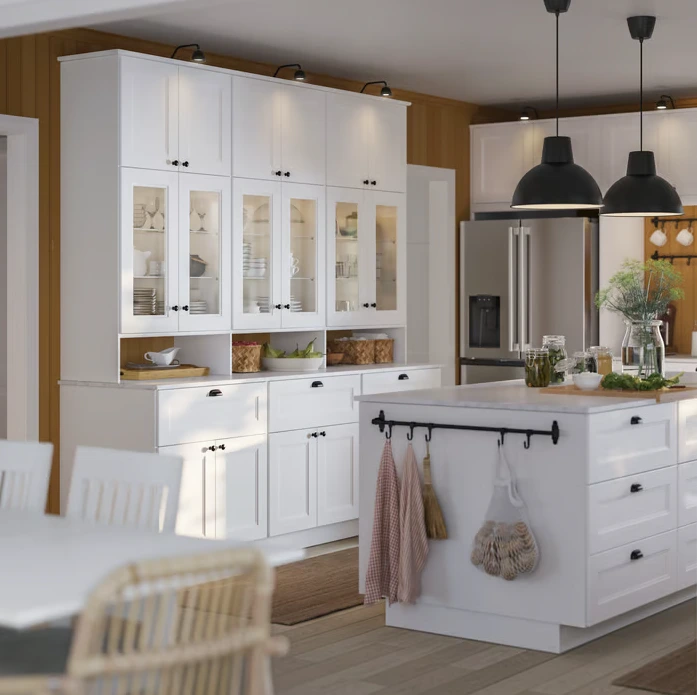
IKEA guides the market in ready-to-assemble stock cabinetry with modular systems like SEKTION, KNOXHULT, and ENHET. These mass-produced cabinets come in preset sizes and layouts that let you create flexible setups within standard measurements. We used MDF (medium-density fiberboard) and particle board to build IKEA cabinets that feature modern finishes and functional designs at reasonable prices.
These cabinets are economical solutions—a complete 10×10 L-shaped kitchen with IKEA stock cabinets costs between $6,000 and $8,000. They are also available right away, which means renovations can start quickly with same-day purchase or delivery in 2-3 weeks.
Custom Cabinets: Fully Personalized Builds
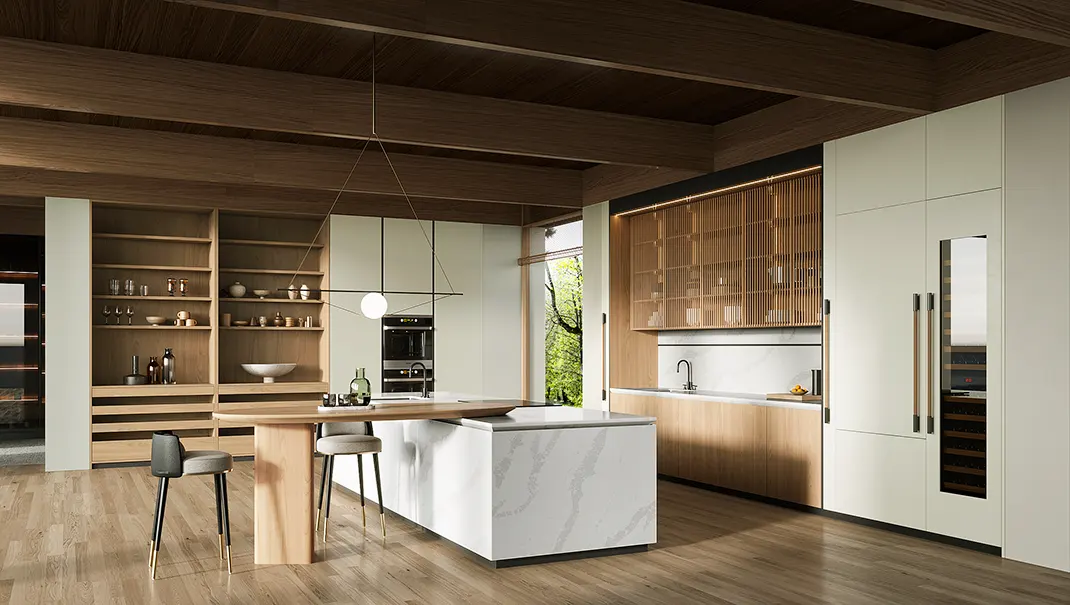
Custom cabinets sit at the other end of the spectrum—local artisans or specialized companies build them for your space based on exact measurements and your priorities. Unlike stock options, craftsmen can tailor every element from wood type and stain to layout, dimensions, and hardware.
This detailed work comes with higher prices—custom cabinetry costs range from $600 to $2,500 per linear foot based on materials and complexity. Building and manufacturing takes 6-12 weeks before installation, but you get cabinets that fit perfectly without gaps or awkward corners.
Semi-Custom Options: A Middle Ground
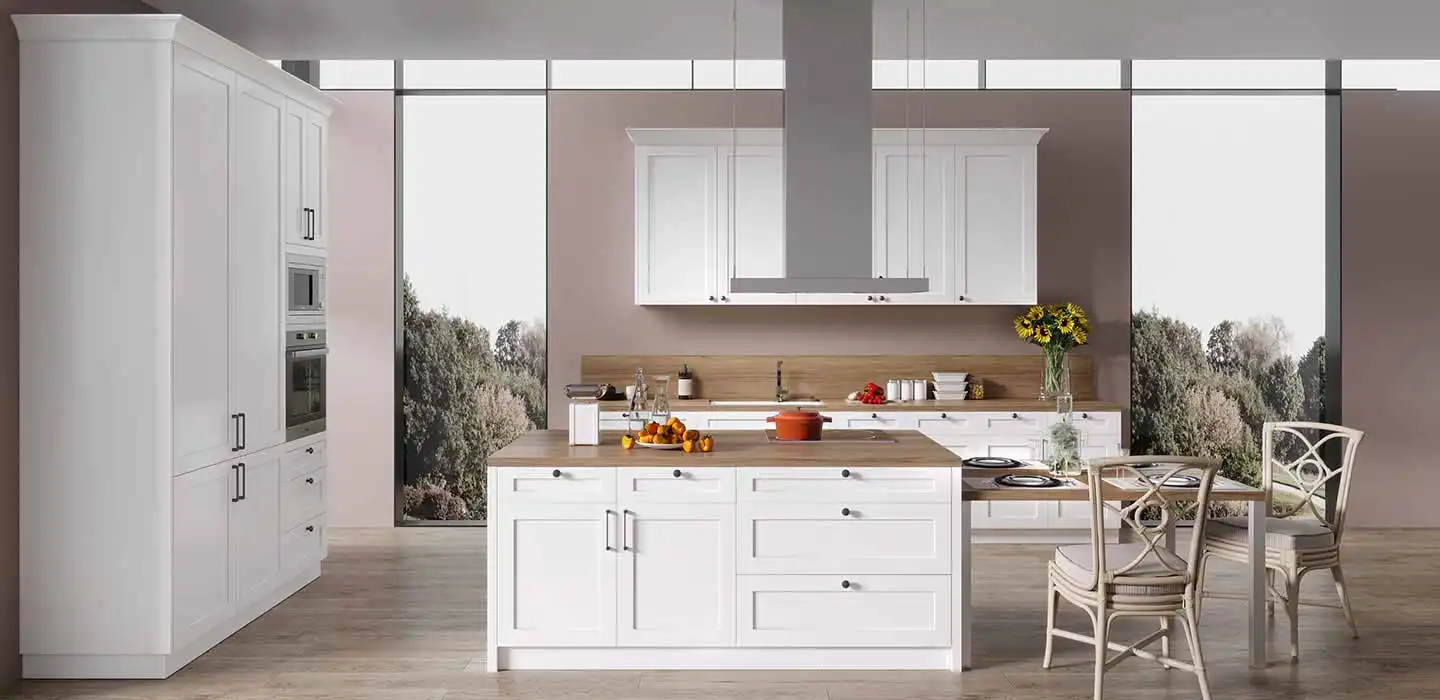
Semi-custom cabinetry strikes a balance between personalization and budget. These cabinets start with standard structures but let you modify dimensions, finishes, and features. You get more design flexibility than stock cabinets and faster production times than fully custom solutions.
A new trend combines IKEA cabinet boxes with custom door fronts from companies like Semihandmade, Swedish Door, Nieu and Kitch. This mix delivers better looks at prices slightly above IKEA’s premium door lines without the full cost of custom cabinetry.
Material and Build Quality Comparison
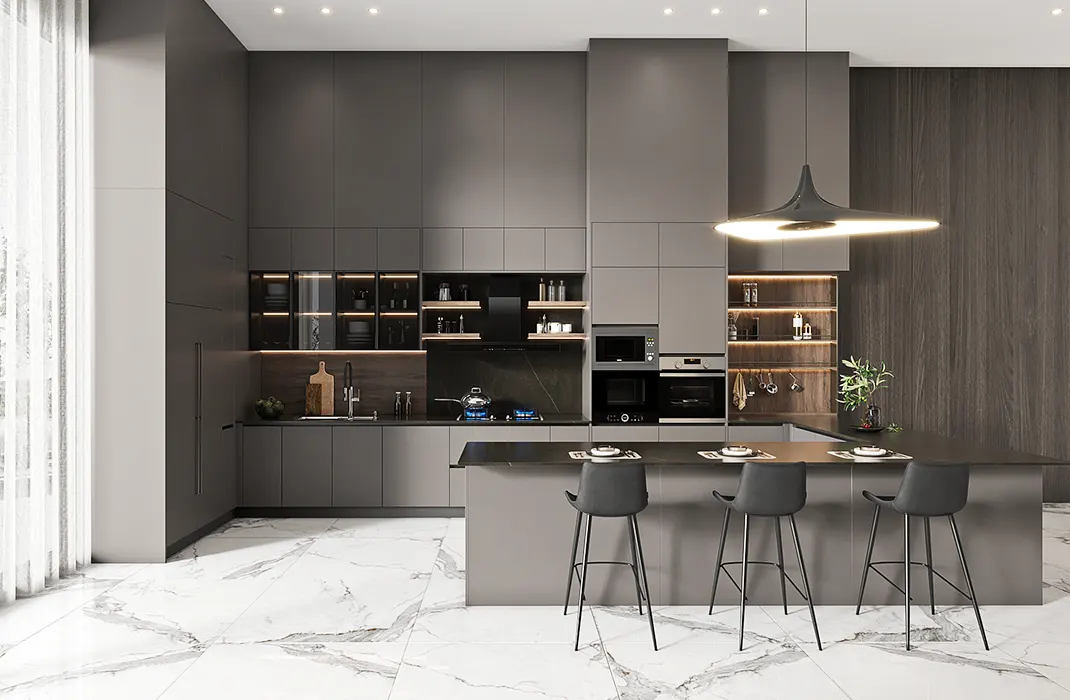
Material quality plays a crucial role in determining the durability, appearance, and price of cabinets when comparing IKEA to custom options.
Cabinet Box Construction: Particleboard vs Plywood
IKEA cabinet frames are made with fiberboard and melamine foil. These materials create sturdy structures, despite what many believe about particleboard’s durability. Custom cabinets, on the other hand, usually feature marine-grade plywood or solid wood that provides better strength and resists moisture. This basic difference shapes how long they last. Plywood cabinets can serve you well for 20-30 years, while particleboard versions typically last 3-15 years. Plywood’s cross-laminated structure makes it about five times more stable than particleboard and helps it resist warping and sagging.
Door and Drawer Fronts: MDF vs Solid Wood
IKEA’s cabinet fronts are mostly medium-density fiberboard (MDF). These provide smooth, uniform surfaces that work well with painted finishes. While these engineered wood products are budget-friendly, they can suffer from moisture damage and show scratches easily. Custom cabinetry’s solid wood fronts display beautiful grain patterns and last much longer. Solid wood needs proper care to avoid warping, but it comes with a big advantage – you can sand and refinish scratches instead of replacing the whole piece.
Joinery and Hardware: Cam Lock vs Dovetail Joints
Cabinet quality differs greatly in how pieces connect together. IKEA uses hidden internal fasteners and good quality Blum hardware for hinges and drawer slides. Custom cabinets often feature dovetail joints – these create strong bonds between wood pieces without mechanical fasteners. Weight and stress spread evenly across these joints, unlike stock cabinet construction that puts wear on fewer points. Well-made dovetail joints stay together even without glue, which helps custom cabinets last for decades.
Customization and Fit for Your Space
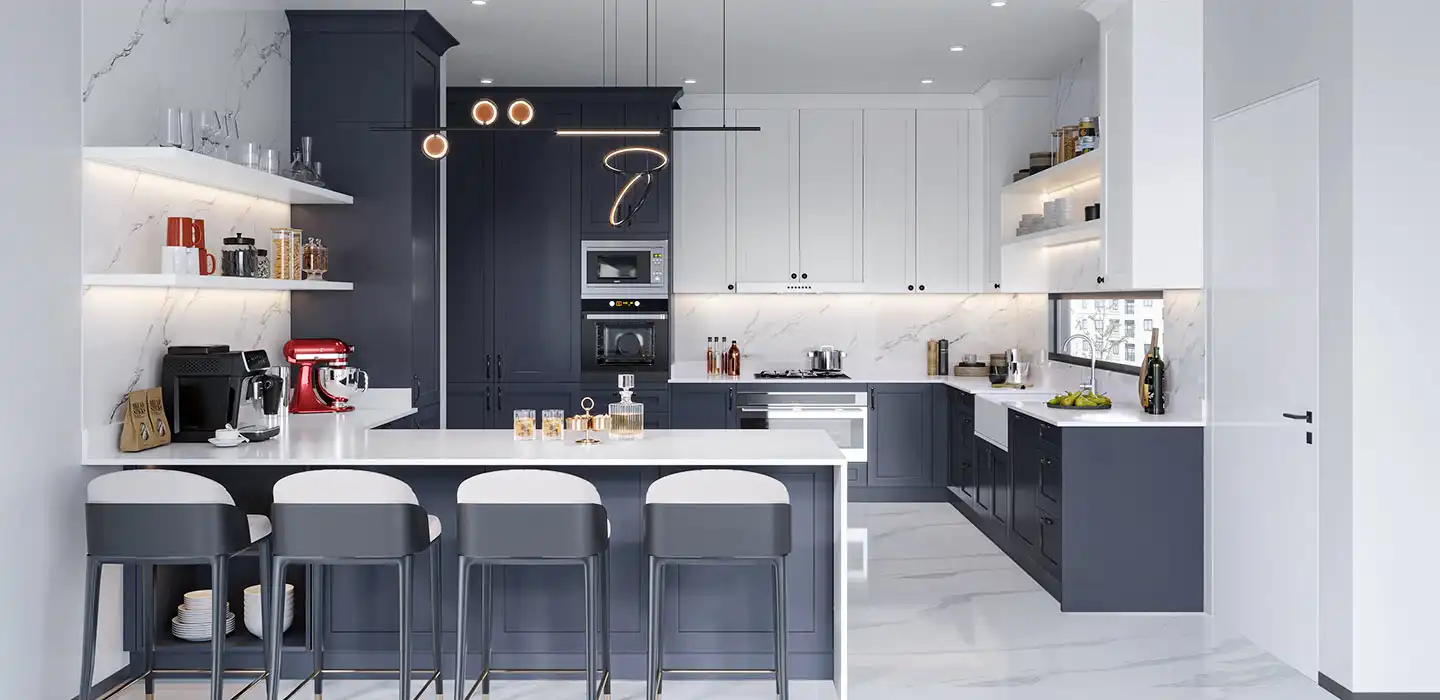
A kitchen’s functionality boils down to how well the cabinets fit your space. The choice between IKEA kitchen cabinets and custom options often depends on this perfect fit.
Custom Fit: Tailored to Unique Layouts
Custom cabinets work best in homes that have unusual layouts, sloped ceilings, or special architectural features. These cabinets are measured down to 1/16″ inch, which helps them blend smoothly with walls, corners, and appliances. Your kitchen gets a clean look without wasted space. This matters a lot in smaller rooms where you need to make the most of storage.
Modular Flexibility: IKEA’s Standard Sizes
IKEA uses a modular system with cabinets in standard 3″ increments instead of custom sizes. These preset dimensions work well in typical kitchen layouts. You might end up with some gaps between cabinets or walls. Smart homeowners add magnetic racks, shelves, or narrow trolleys to use these spaces. DIY enthusiasts can even adjust IKEA cabinets for tight spots by cutting the cabinet bottom and back to fit.
Hybrid Solutions: Custom Fronts on IKEA Boxes
Many people choose a middle path by using IKEA cabinet boxes with custom-made fronts. Companies like Semihandmade, The Cabinet Face, and Kokeena make quality doors that fit IKEA cabinet frames perfectly. You get a customized, upscale look at about half the price of fully custom cabinets. These companies offer several finishes – DIY-ready, thermofoil, textured melamine, and real wood veneer.
Durability and Long-Term Value
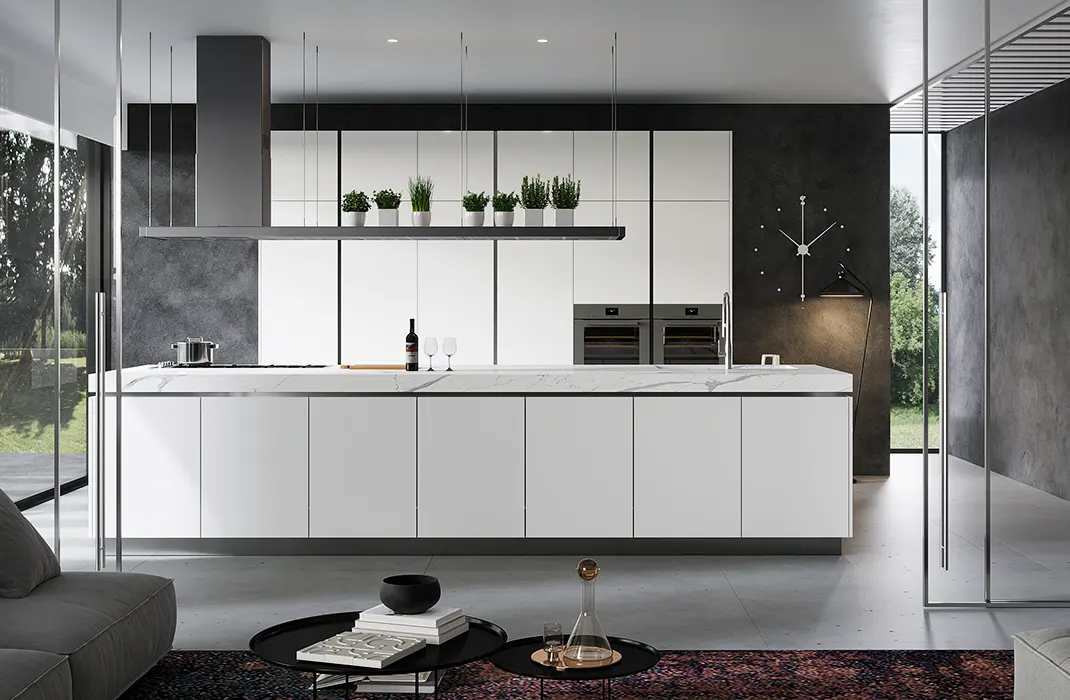
You need to think beyond looks and price when buying cabinets. Their real worth shows up in how well they handle daily kitchen use over the years.
Water Resistance and Daily Wear
Cabinet materials play a big role in fighting moisture. IKEA’s cabinets use particleboard with melamine finishes that work well enough for regular use. These laminate surfaces are easy to clean with a quick wipe. Custom cabinets built from plywood or hardwood handle water better – this matters a lot in kitchens where humidity levels keep changing. Particleboard tends to sag and soak up moisture. It breaks down under pressure as time passes, especially where there’s lots of moisture.
Lifespan: 10 Years vs 25+ Years
The difference in how long they last is huge. Custom cabinets can serve you for 25-50 years with basic care. Their better building methods spread weight evenly – dovetail joints work better than the cam lock systems in IKEA cabinets. IKEA cabinets usually last 10-15 years with normal use. Homeowners who plan to stay put will get better value from custom options since they won’t need replacements.
Warranty and Customer Support Differences
IKEA gives you a 10-year limited warranty for METOD kitchen systems and 5 years for ENHET systems. This covers factory defects but leaves out:
- Normal wear and tear
- Scratches from impacts or cleaning
- Damage from excess steam or water
- Misused or incorrectly cleaned items
Custom cabinet makers work with you through the whole process – from measuring your home to fixing issues after installation. Their warranties often protect your investment better too.
Comparison Table
| Feature | IKEA Cabinets | Custom Cabinets |
| Cost Range | $6,000-$8,000 (10×10 L-shaped kitchen) | $600-$2,500 per linear foot |
| Delivery/Production Time | 2-3 weeks | 6-12 weeks |
| Main Materials | MDF, particle board with melamine foil | Marine-grade plywood or solid wood |
| Door Construction | MDF with painted finishes | Solid wood |
| Joint Construction | Cam lock system with internal fasteners | Dovetail joints |
| Hardware Quality | Blum hinges and drawer slides | Not specifically mentioned |
| Expected Lifespan | 10-15 years | 25-50 years |
| Water Resistance | Suitable for normal use | Superior resistance |
| Size Options | Standard sizes in 3″ increments | Custom to 1/16″ precision |
| Warranty | 10-year limited (METOD system)5-year (ENHET system) | Varies by manufacturer |
| Moisture Durability | Prone to sagging and deterioration in high moisture | Excellent moisture resistance |
| Repair Options | Replacement needed | Can be sanded and refinished |
Conclusion
Your choice between IKEA and custom kitchen cabinets comes down to your needs, budget, and future housing plans. Both options have their own advantages that appeal to different homeowners.
IKEA cabinets are a great value for budget-minded renovators. A complete kitchen costs between $6,000-$8,000 and comes with quick availability. These features make them perfect for temporary homes or investment properties. Their modular design system works well for standard kitchen layouts, and you won’t face the long wait times that custom options need.
Custom cabinets cost more upfront but serve as a better long-term investment. The quality of materials and construction methods make them last 25-50 years, while IKEA cabinets typically last 10-15 years. Homeowners who plan to stay in their property for decades will find more value in this premium choice.
Smart homeowners might want to look at a middle path that’s becoming popular now. Semi-custom options or hybrid solutions use IKEA cabinet boxes with custom fronts. This gives you better looks and personalization without the full custom price tag. Many homeowners love this balanced approach to get quality upgrades at a reasonable cost.
Material quality stands out as the biggest difference between these options. Custom cabinets use marine-grade plywood or solid wood that stands up to moisture and won’t warp. IKEA’s particleboard construction works fine for normal use but doesn’t handle environmental stress as well over time.
Your specific situation should guide your decision. Custom cabinets work best if you have unique architectural features or irregular spaces that need precise measurements. Standard kitchens with regular dimensions might do just fine with IKEA’s modular system, which costs much less.
Quality isn’t black and white in the IKEA versus custom cabinet debate. You’ll need to find the right mix of price, durability, looks, and functionality that matches your needs and budget. Whatever you choose, knowing these key differences will help you make a better decision and end up happier with your kitchen renovation.
FAQs
Q1. How long do IKEA kitchen cabinets typically last?
IKEA kitchen cabinets generally last 10-15 years with proper care and normal use. While this is shorter than custom cabinets, which can last 25-50 years, IKEA cabinets offer good value for their price point.
Q2. Are IKEA cabinets water-resistant?
IKEA cabinets provide adequate moisture resistance for normal kitchen use. They are made of particleboard with melamine finishes, which offer some protection. However, they are more susceptible to water damage compared to custom cabinets made of plywood or hardwood.
Q3. Can IKEA cabinets be customized to fit unique spaces?
While IKEA cabinets come in standard sizes, there are ways to customize them. Creative solutions like adding shelving or narrow trolleys can fill gaps. Some homeowners even modify cabinet widths for extremely narrow spaces. Additionally, companies offer custom fronts designed to fit IKEA cabinet frames for a more personalized look.
Q4. How do IKEA cabinet materials compare to custom cabinets?
IKEA primarily uses medium-density fiberboard (MDF) and particleboard, while custom cabinets often feature marine-grade plywood or solid wood. Custom materials generally offer superior durability and moisture resistance, but IKEA’s engineered wood products provide a cost-effective alternative with decent performance for many kitchens.
Q5. What warranty does IKEA offer on their kitchen cabinets?
IKEA provides a 10-year limited warranty for their METOD kitchen systems and a 5-year warranty for ENHET systems. This covers manufacturing defects but excludes normal wear and tear, accidental damage, and improper use or cleaning.