
Quick Overview
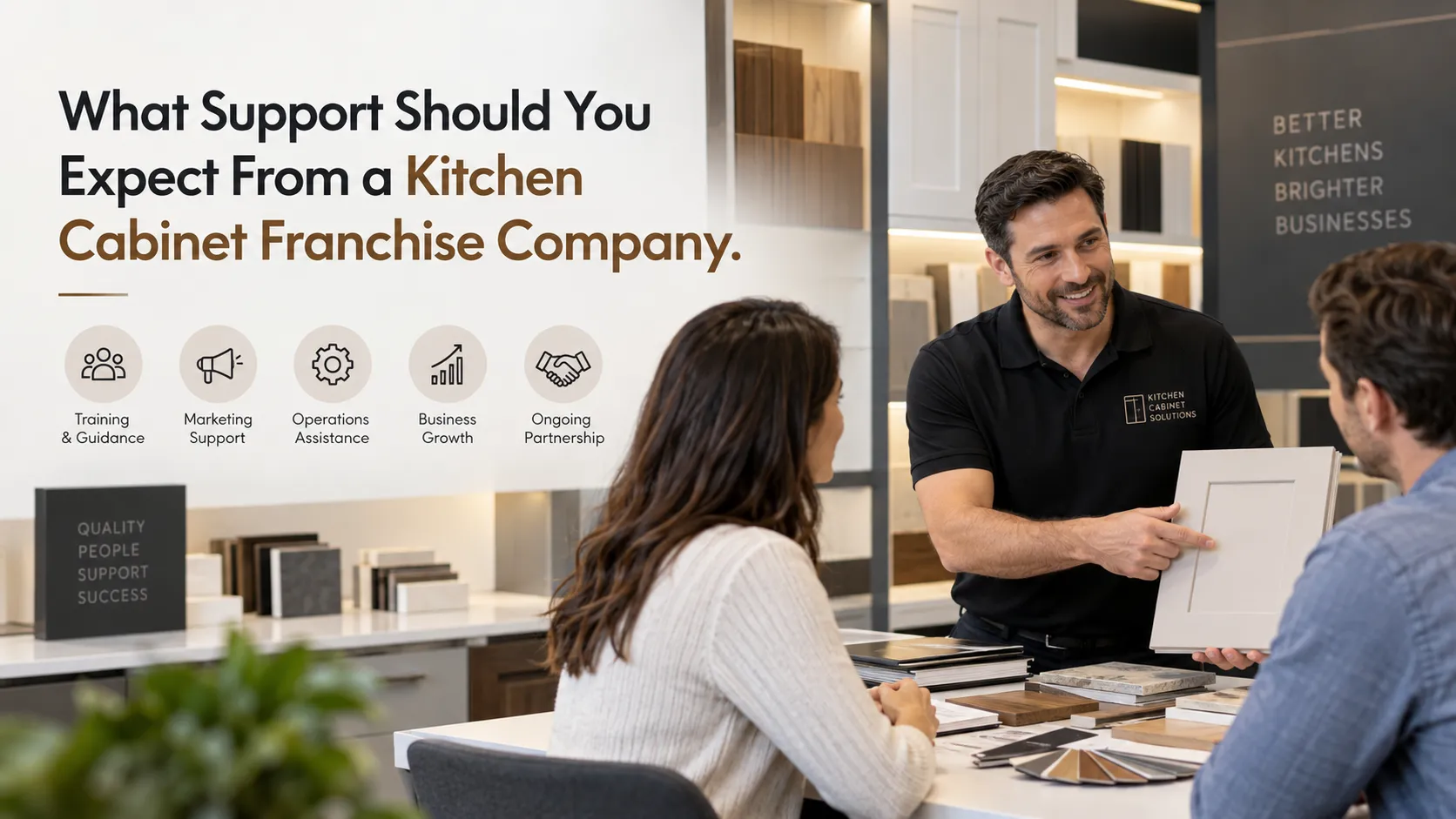
A strong kitchen cabinet franchise should provide far more than branding, offering practical support across business planning, supply chain management, showroom setup, training, design technology, marketing, and after-sales service. The article stresses evaluating franchisors by their systems, responsiveness, and local-market adaptability, especially for overseas dealers. Whole-house customization can further improve sales potential and customer value.
Key Takeaways
- - Franchise support should cover the full business lifecycle, from market entry to after-sales service.
- - Reliable factory-direct sourcing and clear supply chain terms are essential for profitability and consistency.
- - Showroom design, merchandising, and professional training help improve sales performance and customer experience.
- - 3D design and quotation tools speed up proposals, reduce errors, and support customization.
- - Marketing, logistics, and warranty support should be transparent, measurable, and adapted to local market needs.
Choosing a kitchen cabinet franchise is a significant decision for an entrepreneur entering the home improvement market. The strength of the opportunity depends not only on product quality or brand recognition, but also on the practical support provided before, during, and after launch. For overseas dealers, effective kitchen cabinet franchise support can reduce operational risk, improve sales efficiency, and create a more consistent customer experience.
A capable franchise company should provide more than a logo and a product catalogue. It should offer a structured business model, reliable supply chain, professional training, design technology, marketing guidance, and ongoing communication. These elements are especially important in a competitive cabinet sales business, where customers expect accurate quotations, attractive designs, dependable installation, and responsive service.
- Why Franchise Support Matters in the Cabinet Business
- Key Types of Kitchen Cabinet Franchise Support
- 1. Business Planning and Market Entry Guidance
- 2. Factory-Direct Product and Supply Chain Support
- 3. Showroom Design and Merchandising Assistance
- 4. Product, Sales, and Installation Training
- 5. Design and Quotation Technology
- 6. Marketing Support for Local Lead Generation
- 7. Operational and After-Sales Support
- How to Evaluate a Franchise Company’s Support Program
- Why Whole-House Customization Can Strengthen the Opportunity
- Conclusion
- FAQs
Why Franchise Support Matters in the Cabinet Business
Independent dealers often need to develop suppliers, pricing systems, product knowledge, sales processes, marketing materials, and showroom standards at the same time. This can require substantial investment and years of trial and error. A franchise model can provide a tested framework that helps entrepreneurs focus on local market development and customer relationships.
However, not every franchise company offers the same level of assistance. Before signing an agreement, prospective dealers should evaluate whether the franchisor has the resources and systems to support daily operations. The most valuable support is practical, measurable, and relevant to the realities of the local market.
When assessing a kitchen cabinet franchise, look for support that covers the complete business lifecycle: market entry, showroom development, sales conversion, order management, installation coordination, marketing, and long-term growth.
Key Types of Kitchen Cabinet Franchise Support
1. Business Planning and Market Entry Guidance
A professional franchise company should help dealers understand how to establish and position the business. This may include guidance on target customers, showroom location, local competition, product mix, pricing structure, and projected operating costs.
Overseas dealers also need to consider local construction practices, housing styles, consumer preferences, import procedures, and regulatory requirements. A franchisor with international experience should be willing to discuss these factors rather than applying a single market strategy everywhere.
Useful market entry support may include:
- Initial business planning and investment discussions
- Advice on showroom size, layout, and product displays
- Recommended customer segments and sales channels
- Guidance on localizing products and service processes
- Operational checklists for opening and early-stage management
2. Factory-Direct Product and Supply Chain Support
Reliable sourcing is central to a profitable cabinet business. A franchise partner should provide clear information about manufacturing capacity, materials, quality control, lead times, packaging, shipping, and after-sales procedures.
Factory-direct sourcing can help dealers access a broad product portfolio and maintain more consistent pricing. It may also simplify communication by providing a central point for product specifications, order coordination, and technical clarification. Nevertheless, dealers should verify minimum order requirements, payment terms, shipping responsibilities, warranty policies, and procedures for handling damaged or incomplete shipments.
For a kitchen cabinet franchise, product depth is another important consideration. A supplier should support multiple styles, finishes, configurations, and price levels. The ability to offer coordinated wardrobes, bathrooms, doors, windows, and custom furniture can create cross-selling opportunities and support a whole-house remodeling strategy.
3. Showroom Design and Merchandising Assistance
A showroom is more than a display area. It is a sales environment where customers evaluate materials, imagine finished spaces, and develop confidence in the dealer. Franchise support should therefore include guidance on layout, display selection, customer flow, lighting, signage, samples, and brand presentation.
Effective showroom assistance can help an overseas dealer avoid common mistakes, such as displaying too many unrelated products, failing to show storage solutions, or creating a space that does not reflect local customer needs. A franchisor may provide display concepts, visual standards, product samples, and recommendations for presenting kitchens alongside other home customization solutions.
4. Product, Sales, and Installation Training
Training is one of the clearest indicators of a serious franchise support program. Sales staff need to understand cabinet construction, hardware, materials, finishes, dimensions, accessories, and customization options. They must also be able to identify customer priorities and explain the value of different solutions without overwhelming the buyer.
Training should extend beyond product knowledge. Dealers should look for instruction in:
- Lead qualification and consultation
- Space planning and customer needs analysis
- Quotation preparation and margin management
- Objection handling and closing techniques
- Site measurement and order accuracy
- Installation coordination and customer handover
- Complaint management and after-sales communication
Well-trained teams make fewer avoidable errors and can deliver a more professional experience from the first consultation through installation.
5. Design and Quotation Technology
Kitchen remodeling customers increasingly expect visual proposals and fast responses. A franchise company should provide design tools that allow dealers to create practical layouts, realistic presentations, and accurate quotations.
Rapid 3D design and quotation tools can improve the sales process in several ways. Customers can understand how cabinet colours, appliances, storage features, and room dimensions work together. Sales teams can revise designs efficiently, compare options, and reduce manual calculation errors. Faster proposals can also help dealers respond while customer interest is high.
When reviewing a design platform, ask whether it supports local units of measurement, pricing, product availability, technical specifications, revision management, and exportable documentation. The system should be usable by trained sales staff and flexible enough for custom cabinetry projects.
6. Marketing Support for Local Lead Generation
Marketing support is essential, particularly during the first months of operation. A franchisor should provide brand guidelines and practical tools that help dealers generate qualified local enquiries rather than simply promoting the brand at a general level.
Possible marketing support may include campaign templates, social media content, showroom launch planning, product photography, digital advertising guidance, website materials, email campaigns, and promotional calendars. Strong support should still allow local adaptation, because customer behaviour and media channels differ between markets.
Dealers should clarify who manages advertising accounts, who owns customer data, how campaigns are approved, and whether marketing costs are included in franchise fees or paid separately. A clear marketing process helps prevent misunderstandings and allows entrepreneurs to measure the return on promotional investment.
7. Operational and After-Sales Support
A successful cabinet sales business depends on reliable execution after the contract is signed. The franchise company should define how orders are confirmed, drawings are approved, production updates are communicated, shipments are tracked, and installation issues are resolved.
Dealers should also expect documented procedures for warranty claims, replacement components, product defects, missing parts, and customer complaints. Clear escalation channels are particularly important for overseas partners operating across time zones. The objective is not to eliminate every problem, which is unrealistic, but to ensure that problems are addressed quickly and consistently.
How to Evaluate a Franchise Company’s Support Program
Entrepreneurs should assess support using evidence rather than general promises. Request a detailed description of onboarding, training schedules, technology access, supply terms, marketing responsibilities, and ongoing account management. It is also useful to speak with existing dealers in comparable markets and ask about response times, order accuracy, product consistency, and the quality of support after opening.
Consider the following questions before making a commitment:
- What support is provided before the showroom opens?
- Is training delivered remotely, onsite, or through a combination of methods?
- How quickly can the design and quotation system be implemented?
- What are the expected production and shipping timelines?
- Who is responsible for technical approvals and installation guidance?
- What marketing assets and local campaign support are available?
- How are warranty claims and replacement orders managed?
- What performance standards and reporting requirements apply?
A transparent answer to these questions allows dealers to compare franchise opportunities on operational value, not just initial brand appeal.
Why Whole-House Customization Can Strengthen the Opportunity
Kitchen remodeling may be the initial customer requirement, but many homeowners are also planning wardrobes, bathrooms, doors, windows, and other furniture during the same project. A whole-house customization portfolio allows a dealer to increase the value of each customer relationship and reduce dependence on a single product category.
For overseas dealers, this approach can also make showroom investment more productive. Customers can view coordinated solutions in one location, while sales teams can identify additional requirements during the consultation. The ability to deliver a consistent design language across multiple rooms can be a meaningful differentiator in markets with high demand for customized interiors.
Conclusion
The right kitchen cabinet franchise support should help an entrepreneur build a repeatable and locally relevant business. It should cover market entry, factory-direct sourcing, showroom development, professional training, 3D design, quotation technology, marketing support, logistics, and after-sales service.
When evaluating a franchise company, focus on the systems behind the brand. A strong partner provides clear processes, dependable communication, scalable product capabilities, and tools that help dealers serve customers efficiently. This combination can give a new cabinet business a more disciplined path to growth while supporting long-term credibility in the local market.
Ready to build a kitchen cabinet business with a globally established whole-house customization brand? OPPEIN offers both B2C retail and B2B wholesale franchise opportunities in Australia, supported by factory-direct sourcing, showroom assistance, professional training, rapid 3D design and quotation tools, and a broad portfolio spanning kitchens, wardrobes, bathrooms, doors, windows, and custom furniture.
Explore the OPPEIN Australia Franchise Program to review franchise requirements, investment options, and support available for your market.
FAQs
Support may include business planning, showroom guidance, product and sales training, factory-direct sourcing, design and quotation tools, marketing materials, logistics coordination, and after-sales assistance. The exact scope varies by franchise company and should be confirmed in writing.
Many franchise models recommend or require a showroom because customers often want to see cabinet materials, hardware, finishes, and displays before placing an order. Requirements can vary by market, so entrepreneurs should review the proposed showroom format and investment level with the franchisor.
3D design software enables sales teams to create visual layouts, demonstrate customization options, revise proposals, and prepare quotations more efficiently. It can improve customer understanding and reduce errors during the design and ordering process.
Dealers should review lead times, minimum order quantities, shipping terms, packaging standards, warranty coverage, replacement procedures, technical documentation, and communication channels. These details are important for managing customer expectations and protecting margins.
Some whole-house customization brands offer coordinated wardrobes, bathrooms, doors, windows, and custom furniture in addition to kitchens. A broader portfolio can create cross-selling opportunities and help dealers serve larger remodeling projects.